Casparus Treurnicht
Megan Fraser
June 2026
A question we sometimes hear from clients is: if equities have historically gone up over time, why not just invest in them and stay there?`
Equity can be a powerful long-term growth asset, but it does not deliver returns in a straight line, and not all equity markets behave the same way, as seen in the charts below. Some compound steadily, while others can spend years going nowhere, leaving investors with little meaningful progress to show for it.
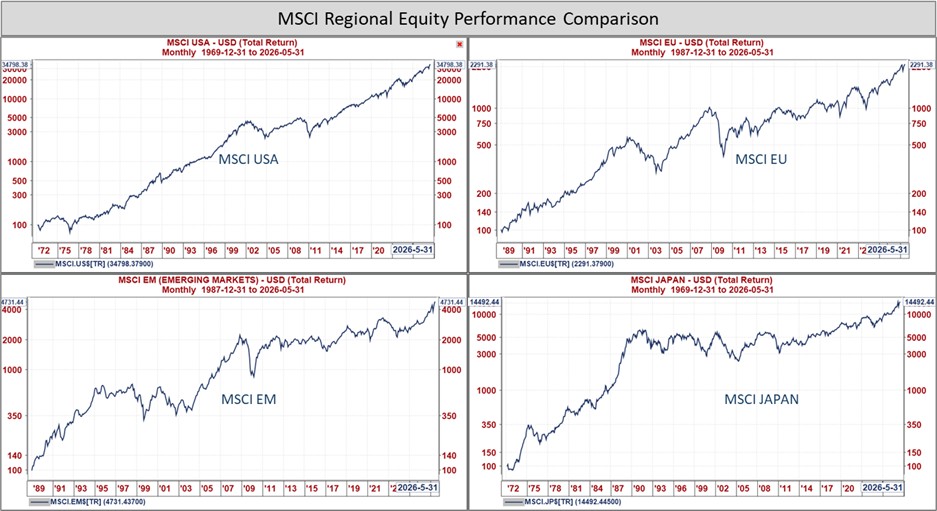
The charts show that long-term equity returns are not always smooth or predictable. Some markets compound steadily, while others move through long periods of stagnation, drawdowns or delayed recovery. Note: All returns in US Dollars.
Japan is the common example. After peaking in 1989, the Japanese equity market spent decades moving sideways rather than significantly compounding investor wealth. Investors who bought around that time were not wrong to believe in equity; they were simply reminded that price, timing and market selection matter.
The same point applies to the US equity market after the technology bubble in the early 2000s. While the global commodity cycle was gaining momentum, US equities were going through a difficult period. Nominal returns were disappointing, but the real outcome was even worse once inflation was taken into account. An investor’s statement may have shown a fairly pedestrian returns for a number of years, but the purchasing power of that money was being steadily eroded.
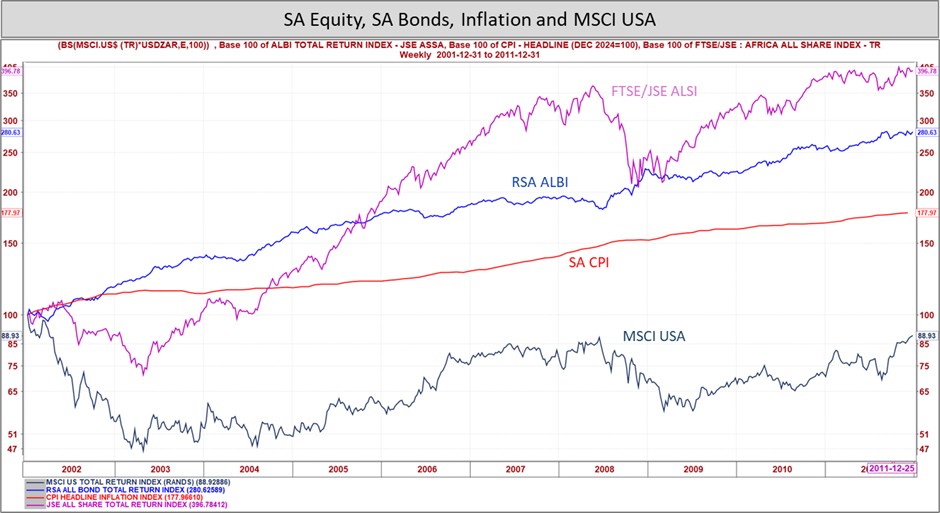
This chart shows that equity markets do not move together. While US equities struggled, other markets benefited from the commodity cycle and currency moves. Market leadership changes. Note: All returns are in South African Rand.
The point investors often miss is that it is not enough for an asset to “go up over time”. Returns also need to outpace inflation. If they do not, the real value of your capital is quietly eroded.
This is why “just parking in equity” should not be seen as the ultimate panacea. Equity may be essential for long-term wealth creation, but that does not mean every equity market will reward investors equally, or at the same time. Different regions, sectors and currencies move through their own cycles. The final return matters, but so does the path taken to get there, because investors have to live through that path in real time.
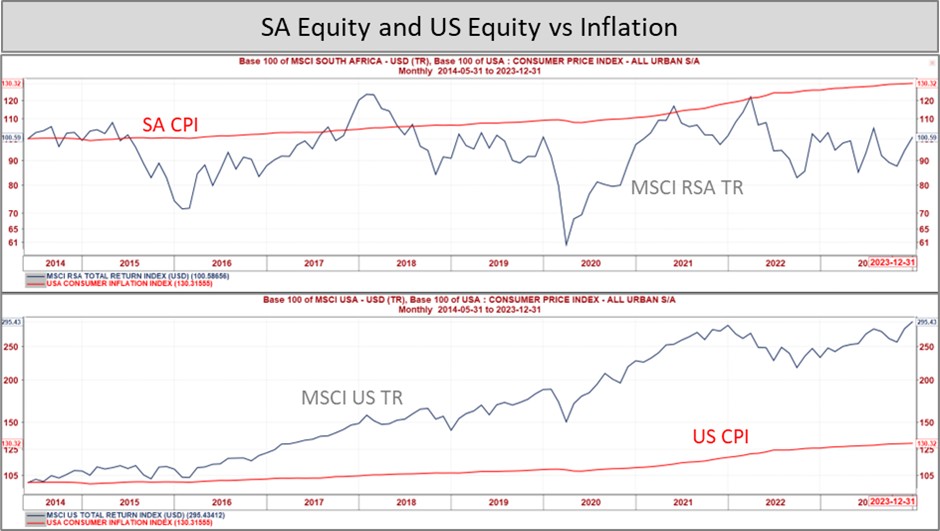
These charts show why nominal returns can be misleading. A market may move sideways, or even rise, but if it fails to beat inflation, investors are not getting wealthier in real terms. The true test is not whether the line moves up, but whether it moves meaningfully ahead of inflation.
This is where cycles become important.
At Gryphon, we pay close attention to cycles, the commodity cycle in particular and the role it plays in market performance, currency movements and investor outcomes. Two markets can deliver similar long-term returns, but the journey between those points can be completely different.
A smoother path makes it easier for investors to stay invested. A more volatile path can test patience, trigger poor decisions and turn a reasonable long-term plan into a badly timed exit. The final return matters, but realistic expectations about the journey are often what keep investors invested long enough to get there.
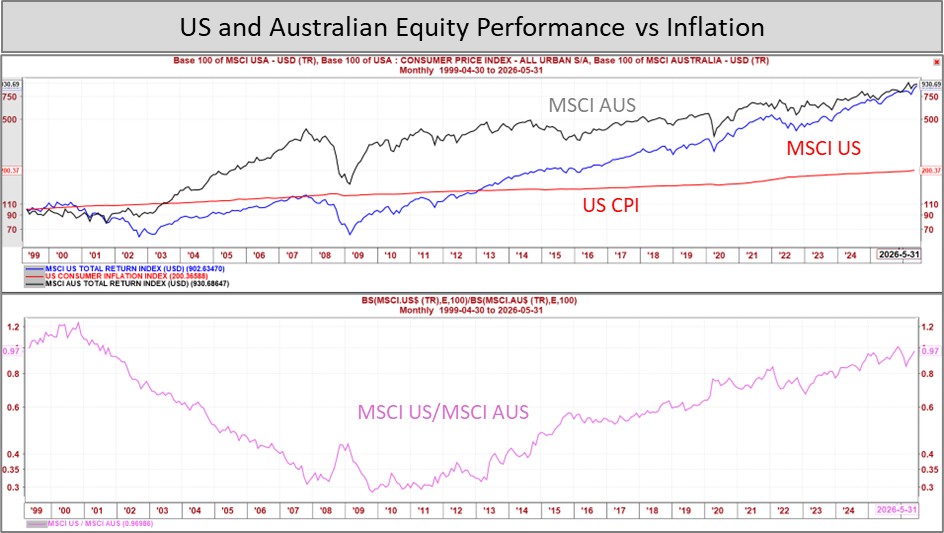
The chart shows that market leadership changes. Australia led during the commodity cycle; the US regained leadership later.
So, is equity a slam dunk?
For inflation-beating returns and long-term wealth creation equity remains essential. But it is not a free pass, and it is not always simple. Market selection, valuation, inflation, currency, and cycles all influence both the journey and the outcome. The question is not simply whether investors should own equity. It is how they own it, how that exposure is managed as conditions change, and what role it plays within a properly diversified portfolio.
Equity is powerful. But it is not a shortcut. It needs discipline.
Postscript: The simple bit
After all that, there is one part of equity investing that is relatively simple: how you access the market.
Once the appropriate equity exposure has been identified, an effective tracker fund should do what it says on the tin: provide clean, transparent and cost-efficient market access. It can also serve as an effective core holding within a properly diversified portfolio. No additional complexity. Just disciplined exposure to the market you set out to own.

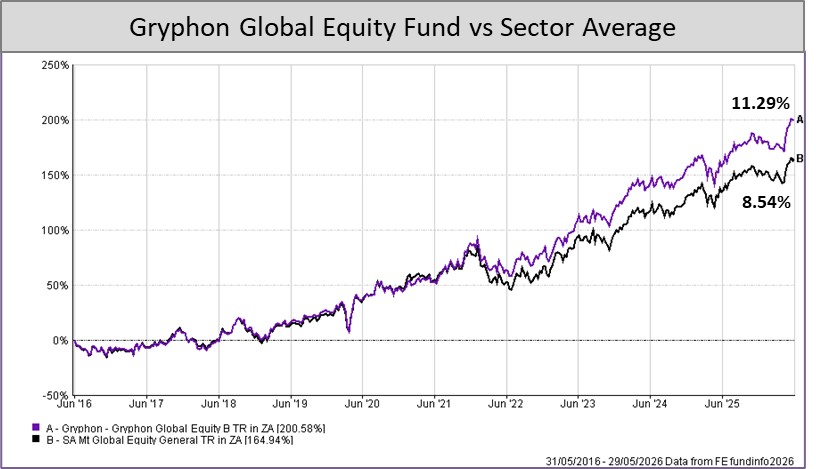
Note: Past performance is not a reliable indicator of future performance. The value of investments may go down as well as up, and returns are not guaranteed. Returns are shown in South African rand for the period indicated, with income reinvested. Sector average returns are shown for comparison purposes only.