This is an article written for press by Patrick Cairns, The Investor’s Guild
In this exclusive for Investor’s Guild members, I chatted to Gryphon’s investment team about how they have updated the way they run their global equity fund to target index outperformance.
The Gryphon Global Equity Fund has been running since November 2014, but from June this year it underwent a shift in strategy.
Instead of managing it as a pure index tracker, Gryphon Asset Management has introduced the ability to tilt the portfolio towards different markets, depending on the phase of the commodity cycle.
“Since we started the strategy 15 years ago, many cheap and efficient alternatives have come to market,” explains executive director Abri du Plessis. “So, if you’re managing a plain tracker in the global equity environment you are competing against big global brands with enormous scale.
“That’s why we broadened the focus and included exposure that can actually offer investors a better return than just the index.”
The fund now seeks to outperform the MSCI ACWI by using a novel approach to adjusting its underlying passive exposures.
“We have very particular IP with regards to how we look at commodity cycles,” says co-portfolio manager Ruan Goosen. “Over the years we’ve built a strong set of indicators that show turning points in that cycle.”
He adds that Gryphon’s back testing shows that using these indicators to allocate to different markets at different times increases portfolio returns.
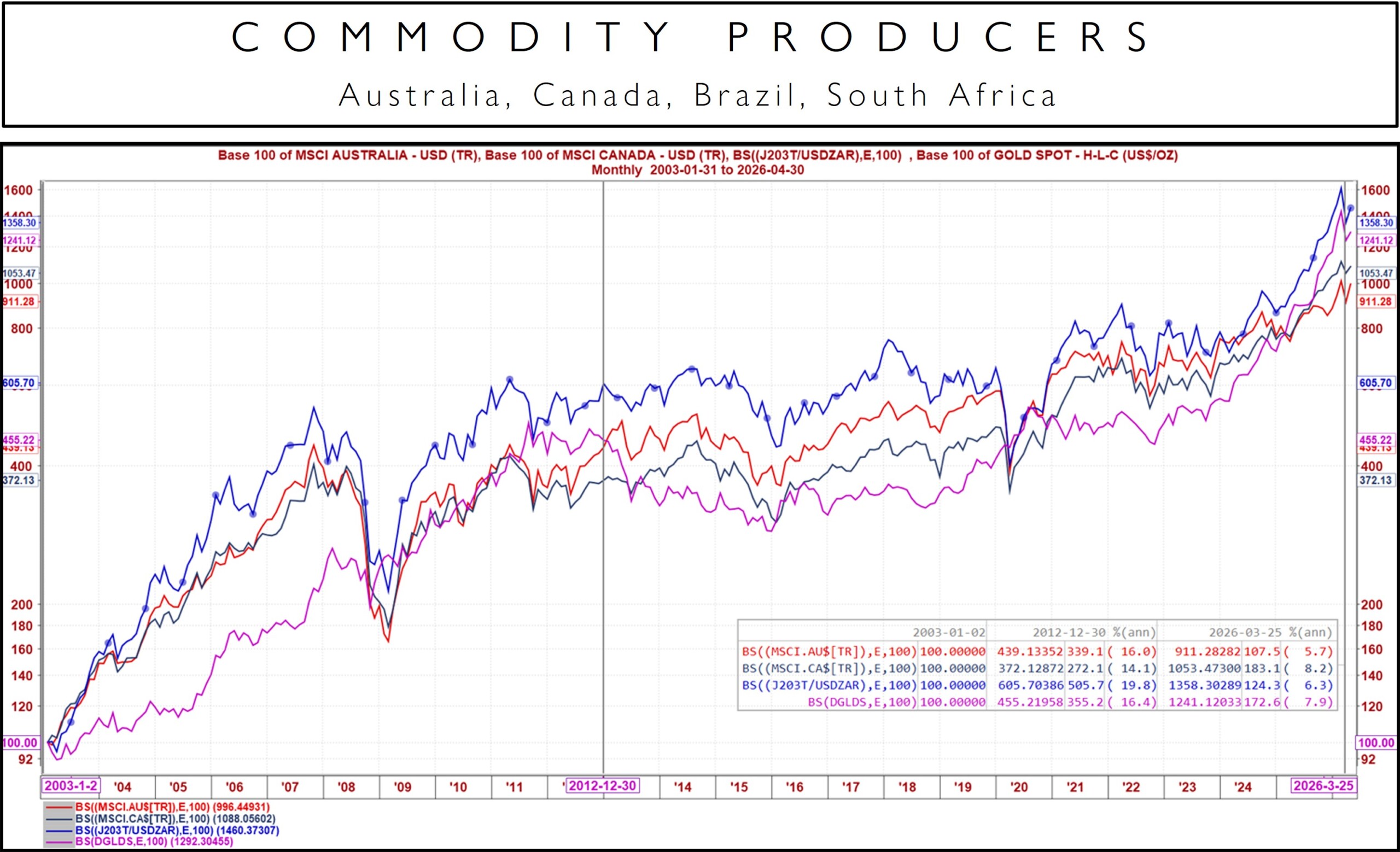
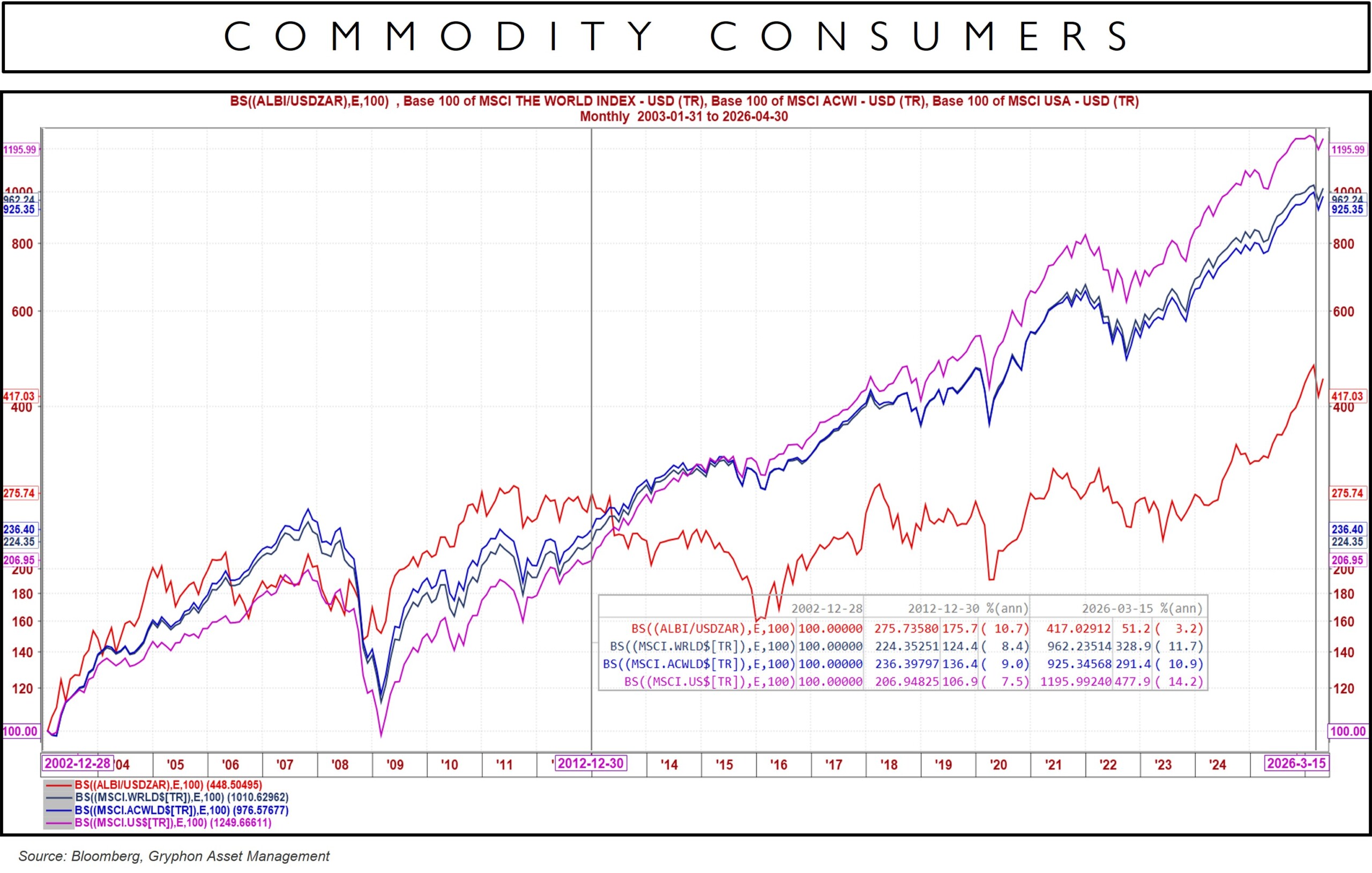
In the upswing of a commodity cycle, the equity markets of commodity-producing countries like Canada, Australia and South Africa often benefit from stronger commodity demand, improving earnings and supportive currency movements, and so exposure to these markets should be up-weighted. When the cycle turns, there is more benefit to being exposed to commodity-consuming markets like the US.
“It’s our belief than when you get those long commodity tilts correct, you are able to outperform an equity benchmark,” Goosen says. “And these cycles are long – often lasting 18 to even 24 years trough-to-trough. We believe our process gives us a disciplined way to identify and respond to them.”
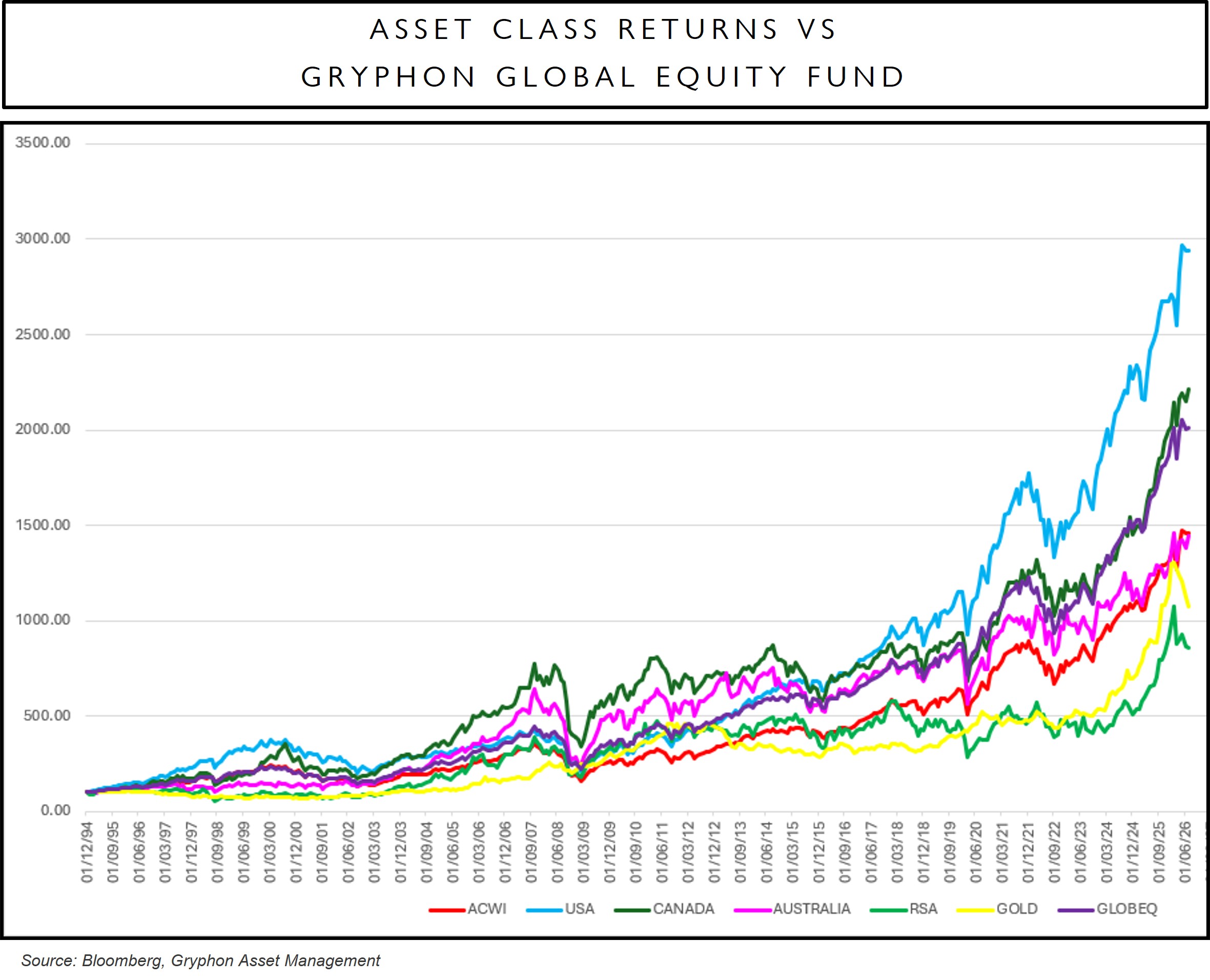
The firm’s indicators show there were two distinct periods over the last 24 years. The commodity cycle ran from the end of 2002 to the end of 2012, followed by a non-commodity cycle that ended earlier this year. Gryphon believes the world is now in a positive commodity cycle again.
As the graphs below show, the markets of commodity producers and those of commodity consumers performed very differently during the two previous periods.
The enhancement to Gryphon’s strategy in its global equity fund is to always track the MSCI ACWI with 60% of the portfolio. The tactical tilts occur in the remaining 40%.
“In a commodity up-cycle, we will have 30% of the portfolio in commodity-producing markets and 10% gold or other stores of value.” Goosen says. “The specific allocations will depend on the stage in the cycle.
“For example, South Africa’s equity market is heavily reliant on precious metals, which tend to lead the cycle. Australia is more base and industrial metals, and we would move there once we’re through the early stage of the cycle.”
When the commodity cycle rolls over, Gryphon will switch that 40% into commodity-consuming markets dominated by more defensive industries, like technology.
Currently, this entire 40% would be allocated to the US as Gryphon’s analysis shows it to be the most effective way to express this view.
“We’re not making a developed market versus emerging market call, because if you look at the MSCI Emerging Market Index today, it’s more tech-heavy than commodities,” Du Plessis notes. “It’s a very specific split we look at.
“At the moment, the US is the biggest consumer economy in the world, and so that’s where we would allocate. But that may change in future.”
Up to 10% of the portfolio can be held in commodity ETFs – either gold or copper.
“Gold will benefit the portfolio as we move into the commodity cycle. Then we give ourselves the option of moving into copper, which usually performs in the second part of the cycle,” Goosen explains.
These allocations are made on Gryphon’s data-based indicators.
“Our roots in passive investing remain central to the strategy,” says Goosen. “We are building on them by adding a disciplined enhancement to a traditional passive building block.
“The rules are deliberately simple, and give us a clear framework for identifying which markets we should be in. We don’t want to lock investors into static allocations when market regimes change. These cycles are long, and we believe investors are better served by a process that can reassess opportunities as conditions evolve.”
Gryphon back-tested this approach to 2002, with encouraging results.
“We didn’t want to do this with the advantage of hindsight and just pick the best-performing markets at different points in time,” Du Plessis says. “We used our indicators to determine at which points we would have been certain that the cycle had turned, and from there we would make the switch.
“These are not arbitrary points. There are several indicators we look at, each of which tells us something about the cycle, but they do not all move at the same time. It can take up to two years for the signals to align.”
Using this method, the back-testing showed that during the upswing in a commodity cycle, the strategy would have delivered outperformance of 4% per annum ahead of the ACWI. When the cycle turned, the strategy slightly outperformed the ACWI with returns in-line with the MSCI World Index, but at lower volatility.
“The exposure to countries and currencies will always still be passive building blocks,” Du Plessis says. “We are not going to start selecting commodity counters because that’s not where our expertise lies.
“But we believe we can deliver above-index returns through a combination of broad market participation, both to commodity indices and commodity currencies, and disciplined sector asset allocation at different points in the cycle.”